Practice
Atelier Mø is a practice before it is a shop. We make a small number of garments each year, by hand, for people who intend to keep them. The work is slow on purpose — measured, cut once, and finished by the same hands throughout.
Process
Conversation
Every commission begins in the studio, not on a screen. We talk through how a piece will be worn, what it must do, and what it should never try to be. Nothing is measured until the intent is clear.
Cloth
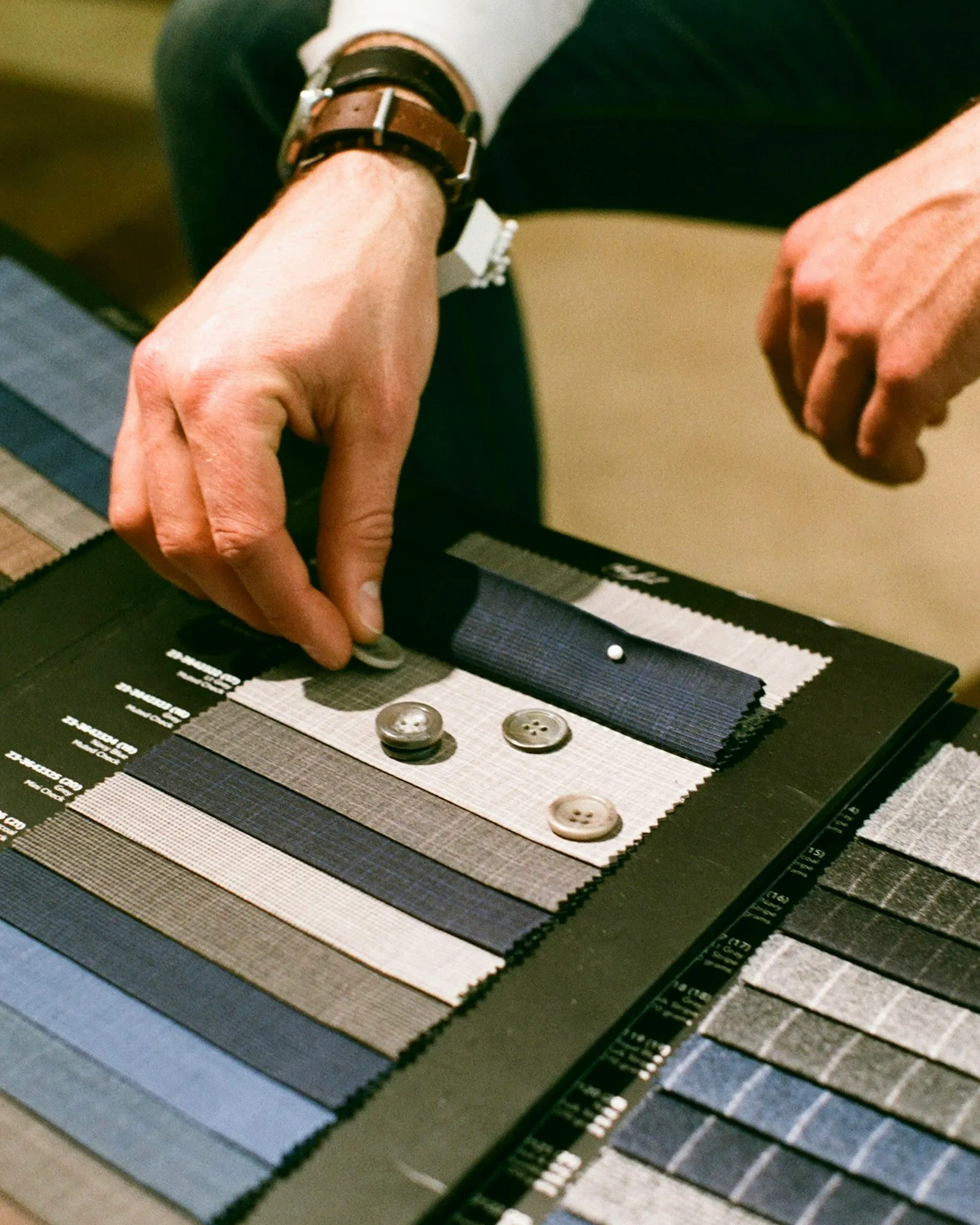
We choose the material together, from a small shelf of wool, linen and silk we already trust. Cloth is selected for how it ages and moves — not how it photographs — and a length is set aside for you alone.
Pattern & fitting
A pattern is drafted to the body and cut once. The first fitting is in calico; the second in cloth. We adjust by hand until the garment stops asking to be noticed.
Finishing
Seams are felled, hems turned, and buttonholes worked by needle. The piece is pressed, rested, and pressed again. It leaves the atelier with the notes on how to keep it.
Materials
Wool
- British and Irish cloth — flannel, tweed, loden — woven to soften with wear rather than pill.
Linen
- Belgian and Irish flax, from handkerchief weights to heavy suiting, often left naturally dyed.
Silk
- Wild and cultivated silks used unlined and on the bias, where the cloth is left to do the work.
Thread & findings
- Horn buttons, silk thread, and canvas interlinings — every component chosen to be mended, not discarded.
In the atelier
“A garment made once has nothing to hide behind. Every seam is the only one.”